A Local SEO Playbook for Florida Treatment Centers
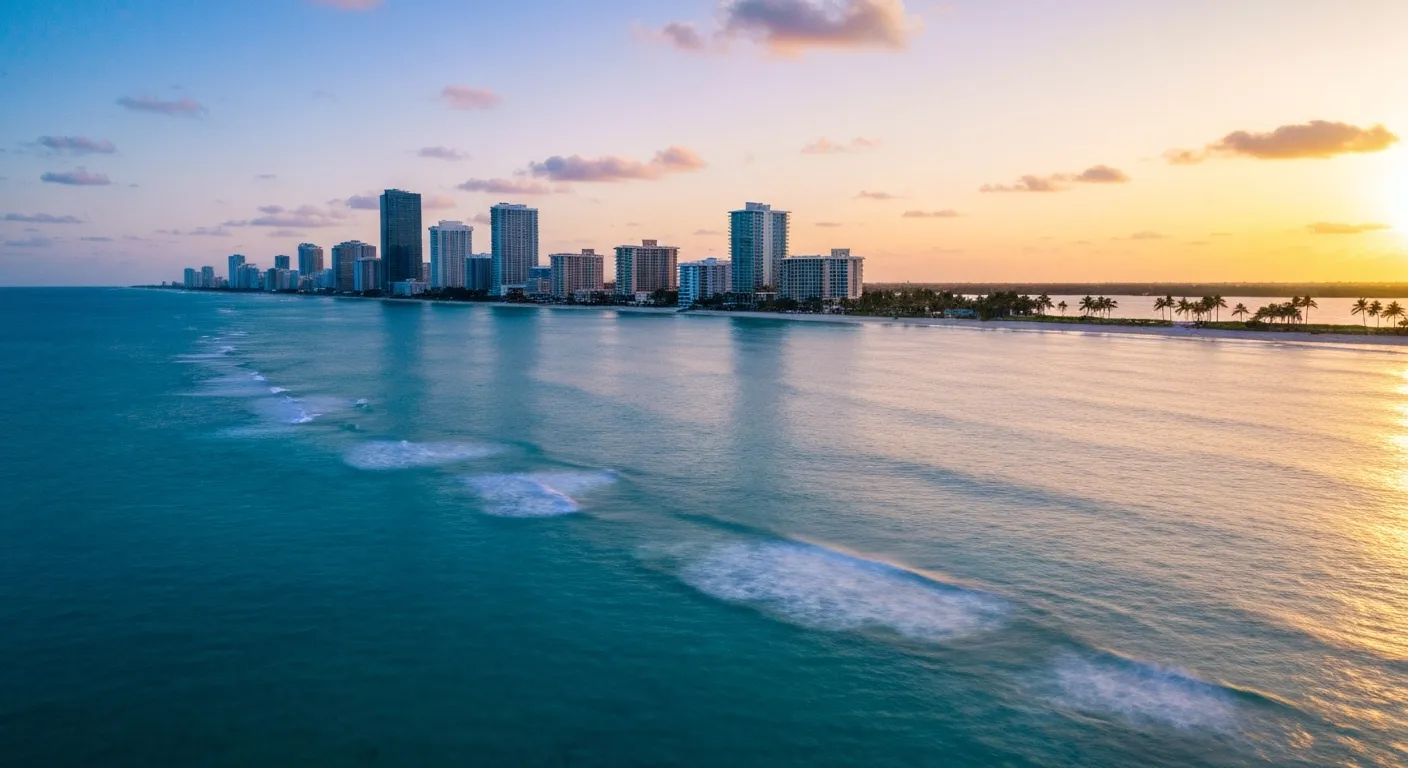
Florida is one of the most competitive recovery markets in the country, and the search results show it. A single Map Pack in Stuart, West Palm Beach, or Delray can decide whether a family books an admissions call with your facility or one a few miles up I-95. That’s why local SEO for Florida treatment centers works so differently from generic local SEO, and why we built this playbook around the specific signals Google and the major directories actually weigh for licensed addiction treatment providers.
At NetVisits, we run this exact framework for our treatment center clients across South Florida, the Treasure Coast, Tampa, Orlando, and Jacksonville, and the results have been steady enough that we want to share how the moving parts fit together.
Key Takeaways
- Florida treatment centers need a LegitScript-certified Google Business Profile, an active AHCA license on display, and clean primary and secondary categories before any other local SEO work matters.
- Citations on NPI, NAATP, SAMHSA, FARR (for sober living), Yelp, BBB, and Healthgrades build the trust signals Google uses to validate a treatment facility.
- A city-plus-service page architecture (e.g., “Detox in Stuart, FL,” “IOP in West Palm Beach”) wins long-tail searches that admissions teams care about.
- Review acquisition must be HIPAA-aware, meaning it must invite reviews without identifying patients or referencing their treatment.
- The MedicalBusiness and LocalBusiness schemas with verified geo coordinates give Google structured evidence that your facility is real, licensed, and located where you say it is.
The Google Business Profile Setup That Actually Holds Up
For a Florida treatment center, the Google Business Profile is the front door, and Google treats it that way. The primary category should map to the service you most want to be found for, typically “Addiction Treatment Center,” “Detox Center,” or “Mental Health Service,” depending on your licensure and clinical focus. Secondary categories let you stack relevant variations like “Rehabilitation Center,” “Counselor,” or “Mental Health Clinic,” but stacking too many waters everything down. Pick the categories that match your AHCA license and the services you genuinely deliver, then leave the others alone.
LegitScript certification matters here in two ways. The obvious one is that Google Ads will not run for addiction treatment without it, so any paid traffic strategy depends on the cert. The less obvious one is that LegitScript appears as a trust signal in the Maps ecosystem, and reviewers (human and algorithmic) rely on it when deciding whether a treatment center listing is real and safe. We’ve seen suspended profiles get reinstated faster when LegitScript is in good standing, and we’ve seen new profiles approved without a wait when the cert is in place from day one. If you’re certified, make sure your LegitScript profile and your GBP listing share the same business name, address, and phone number.
The Florida AHCA license should be visible somewhere on your homepage and your contact page, and the license number should match what’s in your LegitScript record. We also recommend including the license number in the GBP “From the business” description and in your Schema markup, because Google’s local team often cross-checks license registries when a treatment center listing is reported or challenged. Photos help, too, but only photos of your actual licensed facility. Stock photos and pulled images can trigger a Maps quality review, which is the last thing you want when admissions calls are tied to your visibility.
The Citation Stack That Florida Treatment Centers Need
Citations are still one of the cleanest trust signals for a treatment facility, and the stack we build for our clients is heavier on industry directories than a typical local business would need. The non-negotiables: NPI registry (your NPI number should be live and accurate for every clinician and the organization), NAATP membership directory if you qualify, SAMHSA’s national treatment locator at findtreatment.gov, the AHCA provider lookup for Florida, Better Business Bureau, Yelp, and Healthgrades.
For sober living and ancillary residences, FARR (Florida Association of Recovery Residences) is essential. Every one of those listings should have the same business name, address, phone number, and website, character for character.
Where teams typically slip is in the long tail of secondary citations. Apple Maps, Bing Places, Foursquare, MapQuest, Yellow Pages, Chamber of Commerce, and Florida-specific health and recovery directories all carry weight when stacked together. We don’t chase volume for its own sake, but consistency across 40 to 60 quality citations beats a chaotic spread across 200 random ones. Once the stack is in place, the goal is to keep it accurate as your facility grows, adds locations, or changes phone numbers.
City and Service Page Architecture for Florida
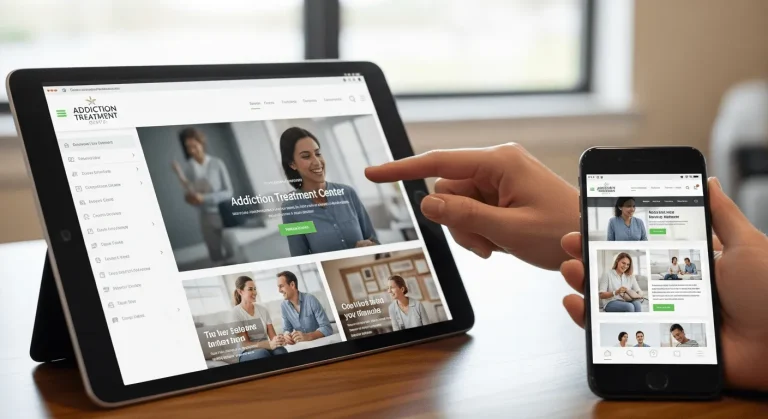
The structure that wins long-tail traffic for treatment centers is a clean grid of city-plus-service combinations. A facility in Stuart, FL, with a campus that serves the Treasure Coast might run pages like “Detox in Stuart, FL,” “Residential Treatment in Stuart, FL,” “PHP in Port St. Lucie,” “IOP in West Palm Beach,” and “Sober Living in Jupiter, FL.” Each page is genuinely written for the specific city and service, not spun, not duplicated, not stuffed with the same keyword 400 times. Real local context, real distances to the facility, real driving directions, real reasons a family from that area would choose you.
For multi-county or regional providers, service area pages let you accurately reflect the geography. If you’re admitting clients from across South Florida, you don’t need a page for every zip code, but you do need a page for each major metro you serve.
The Florida market clusters naturally into South Florida (Miami, Fort Lauderdale, Boca Raton, Delray, Boynton, Palm Beach), the Treasure Coast (Stuart, Port St. Lucie, Jupiter, Vero Beach), Tampa Bay (Tampa, St. Pete, Clearwater, Sarasota), Central Florida (Orlando, Kissimmee, Lake Mary), and Jacksonville plus the First Coast. Map your service area pages to those clusters, and you’ll cover the searches that matter without spamming Google with thin pages.
Review Acquisition Under HIPAA
Treatment center reviews are a strange animal. Volume matters, recency matters, and Google clearly rewards facilities that consistently earn fresh reviews. But HIPAA does not allow you to confirm that someone was your patient, ask them about their treatment in public, or use protected health information in your responses.
The way through is to invite reviews from anyone who interacts with your facility (family members, self-identifying alums, professional referral partners, vendors) without ever identifying them as a patient. The invitation is generic, the response is generic, and the protected information stays protected.
In practice, that means setting up an automated review request flow that goes out after a non-clinical touchpoint (a family education session, a community event, a tour, or a graduation). It also means training your admissions and alumni teams to never thank a reviewer “for trusting us with your recovery” in a public reply, because that confirms a patient relationship. We typically write a small library of compliant response templates for clinical clients and make sure they’re the only responses anyone on the team uses.
Schema Markup That Backs Up the Story
The schema is where most treatment center sites are still leaving signals on the table. The pairing we use is MedicalBusiness and LocalBusiness, with geo coordinates set to the actual coordinates of your licensed facility (not the coordinates of a virtual office or a registered agent address).
The MedicalBusiness type lets you describe the medical specialty, accepted insurance, and available services in a structured form that the AI systems can summarize and search results can read directly. LocalBusiness handles the operational details, such as opening hours, phone number, and address. Layered correctly, the schema confirms what the rest of your site, your GBP, and your citations are already saying.
Reviews schema is tempting, but be careful. Google has tightened the rules on review snippets for medical and treatment listings, and a sloppy implementation can trigger a manual action. Use only first-party reviews collected on your own site, never aggregated review counts from third-party platforms, and never review schema on a page that isn’t the entity being reviewed.
Defending Against Map Pack Spam
Florida’s treatment market has a documented history of Map Pack manipulation. Fake listings, lead-generator listings disguised as facilities, keyword-stuffed business names, and address spoofing all appear regularly in the markets we monitor. The defense is methodical, not dramatic. We audit each of our clients’ Map Packs monthly, document any spam listings (screenshots, the spammed name, the spammed category, and the bogus address, if it’s verifiable), and submit them via Google’s Business Redressal Complaint form with evidence attached. Persistence wins. A single report rarely removes a spam listing, but a documented pattern of reports with clear evidence tends to work over a few cycles.
While the spam removal process runs in the background, the offensive move is making your own listing harder to outrank. That means a steady flow of GBP posts (we recommend weekly), real photos uploaded monthly, Q&A populated with the questions your admissions team actually answers, and the same review velocity month after month. The facilities that ride out a Map Pack spam wave are usually the ones doing the daily local SEO work, not the ones who set up GBP once and forgot about it.
What This Looked Like for Coastal Detox
We took on Coastal Detox in Stuart, FL, with a bundled retainer that covered local SEO, on-page work, and the GBP playbook outlined above. Three months in, organic traffic was up 164%, and total inbound calls were up 40%. The bulk of the gain came from the city plus service page architecture (Stuart, Port St. Lucie, and Jupiter pages started ranking inside the Map Pack and the local organic results within eight weeks), tightening the LegitScript and AHCA signals, and rebuilding the citation stack across NPI, NAATP, SAMHSA, BBB, and the Florida-specific directories.
The piece that surprised the admissions team most was how much of the call lift came from cleaning up the GBP itself. Adding real photos of the facility, populating Q&A with the questions admissions answers every day, posting weekly, and responding to every review (compliantly) shifted Coastal’s profile from “passive listing” to “active business,” and Google rewarded it. The on-page and content work compounded on top of that, but the GBP was the foundation.
References
- Guidelines for representing your business on Google (Google Business Profile Help)
- AHCA Licensure & Background Screening
- LegitScript Addiction Treatment Certification overview
- SAMHSA National Helpline and treatment resources
- FARR, Florida Association of Recovery Residences
- HIPAA, Health Information Privacy
- Schema.org MedicalBusiness type reference
FAQs
Do I really need LegitScript certification if I’m not running Google Ads?
For organic local SEO alone, LegitScript is not strictly required, but it has become a meaningful trust signal in the Google Maps ecosystem for addiction treatment. We recommend it for any Florida treatment center that wants long-term stability on Google Business Profile, and it’s essentially required the moment paid traffic enters the plan.
How many city plus service pages should a Florida facility have?
For a single-location facility, we typically build 8 to 15 city-and-service combinations that match the metros and services you genuinely serve. Building 50 thin pages to chase every zip code in the state will hurt you, not help. Quality and local specificity beat volume every time.
What’s the right pace for new Google reviews on a treatment center profile?
Steady beats spikey. A facility that consistently earns two to five new reviews per week will outperform a facility that gets twenty in one week and then nothing for three months. Google looks at velocity and recency together, so building a habit beats running a one-time review push.
Can I list multiple locations on one Google Business Profile?
No. Every physical, licensed location needs its own Google Business Profile with its own AHCA license number, address, and phone. Trying to consolidate multiple Florida locations into a single listing is a fast path to suspension.
How long before local SEO results show up for a Florida treatment center?
The realistic window is 60 to 120 days for the first meaningful Map Pack and local organic movement, assuming the GBP foundation, citations, schema, and city-plus-service pages are all built within the first 30 days. Coastal Detox saw a 164% traffic lift and a 40% call lift in three months, which is on the faster end and tied to consistent execution across the entire playbook.