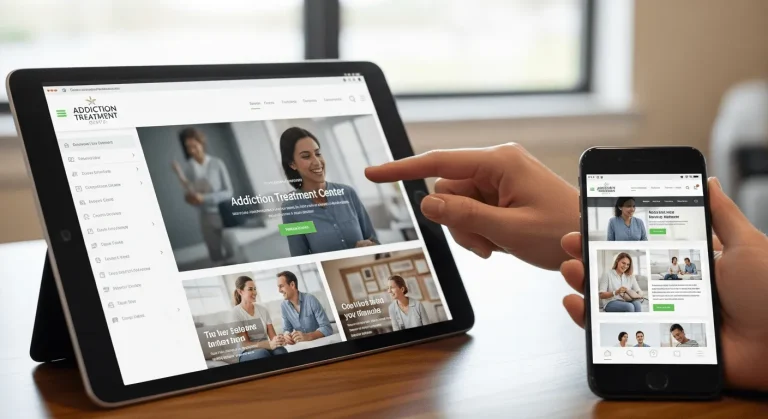
Boost Your Drug Rehab Center’s Growth With Proven Digital Strategies
Getting more people the help they need starts with making your rehab center easier to find, trust, and choose online.
In this article, you’ll learn how drug rehab digital marketing fuels sustainable growth and helps you reach individuals and families searching for support. We’ll cover outreach strategies, website optimization, SEO techniques, and targeted advertising. Use this playbook to strengthen your online presence and drive more admissions efficiently.
Why Drug Rehab Digital Marketing Matters For Growth
The Shift From Referrals To Online Search
Families no longer wait for a physician referral or word-of-mouth recommendation to pick a treatment center. Most start with Google. The rise of smartphones means people search for “rehab near me” the moment a crisis hits. That search behavior puts massive weight on your online visibility.
Local search results and mobile-friendly websites now rank as top discovery methods. But visibility alone isn’t enough; reviews strongly shape trust. A PubMed Central study on online reviews and mortality rates found that higher ratings among substance use treatment centers correlate with lower drug-related death rates, reinforcing how reputation affects real-world outcomes.
Long-Term Impact On Patient Acquisition
Online marketing for rehab centers does more than fill beds short-term; it builds a stable, measurable pipeline.
When you depend only on past referrals or insurance directories, you’re flying blind. With digital strategies, you can:
- Track where leads come from
- Analyze behavior before admission
- Forecast admission trends month over month
Effective digital outreach supports census stability across seasons. That’s especially important for centers operating in competitive metropolitan areas or offering niche treatment services.
Specialized help matters too. A team focused on addiction treatment marketing agency services understands the compliance, terminology, and urgency rehab centers face. They’re not generalists; they know how to position your programs where families are looking and convert attention into action.
Build A Strong SEO Foundation For Your Rehab Center
On-Page and Local SEO Essentials
Effective drug rehab SEO starts with optimizing each service page to match what people are actually searching for. Use specific, intent-based keywords like “opioid detox near me” or “outpatient program for alcoholism” directly in your headings, meta descriptions, and image alt text—structure your content to clearly answer common search questions, which builds trust and authority.
Pay close attention to technical on-page elements:
- Unique meta titles and descriptions for every page
- One clear H1 heading per page targeting a primary keyword
- Schema markup for location, services, and reviews (especially helpful for map visibility)
For local traffic, your team should fully complete and regularly update your Google Business Profile. Choose the correct category, respond to reviews, and maintain consistent NAP (name, address, phone number) details across all directories to avoid confusion or ranking drops.
Technical Optimization For Trust and Conversion
A rehab center site has to load quickly, display correctly on any device, and feel secure. These aren’t just UX perks; they directly impact search rankings. Google gives preference to secure (HTTPS) mobile-responsive pages that load quickly and have low bounce rates.
Use tools like Google Search Console or Screaming Frog to:
- Fix crawl errors or broken internal links
- Ensure all critical pages are properly indexed
- Identify outdated or low-performing assets
If ranking issues persist, a professional SEO audit can pinpoint gaps holding your visibility back.
A PubMed Central SWOT analysis of rehab marketing highlights growing digital competition as a threat, especially from corporate chains and lead aggregators. That’s why using tailored SEO for rehab centers is critical for standing out locally and nationally.
Create Content That Connects With Families and Prospects
Educational and Empathetic Content Formats
Families searching for help often feel overwhelmed, scared, and unsure where to begin. Your content should meet them there. Effective drug rehab digital marketing uses content to inform and reassure, not sell.
Consider these impactful formats:
- Blog posts that answer common questions like “how long does withdrawal last?” or “what to expect in residential treatment.”
- Alums and family testimonials that offer hope and sincerity through real recovery journeys
- Downloadable guides such as “10 Signs It’s Time to Seek Help” or “What Families Should Know About Inpatient Rehab.”
- FAQ pages that address insurance, visitation, and daily schedules, making the unknown more approachable.
Each of these helps people make informed decisions while building trust in your expertise.
Aligning Content With Search Intent
Not every visitor is ready to commit, not yet. That’s why tailoring content to a user’s search intent is key to patient acquisition for rehab centers.
- Informational searches need helpful, unbiased education without pressure (e.g., “what is dual diagnosis?”).
- Transactional queries work better with treatment-focused pages offering enrollment steps or direct contact options.
- Topical authority is earned by thoroughly covering related issues such as co-occurring disorders, relapse signs, and rehab aftercare.
By aligning posts with real concerns rather than just marketing goals, your site becomes a trusted resource.
Content strategies for rehabs support both organic traffic growth and early-stage engagement, helping each piece serve a clear purpose in the larger conversion path.
Avoiding hype at this stage is non-negotiable. As Harvard Health’s ethical advertising guidelines warn, misleading content harms both your credibility and patient safety.
Pairing content with effective content marketing services strengthens your long-term digital strategies for addiction treatment by supporting both rankings and reader trust.
Use Paid Ads To Capture High-Intent Rehab Leads
Targeting With Google Ads and Local Campaigns
Rehab centers advertising through Google Ads must walk a fine line. To stay compliant, avoid addiction-related keywords that Google restricts, like “rehab near me” or “detox center,” unless you’re LegitScript-certified. Instead, focus on long-tail terms tied to specific services or locations.
Effective targeting starts with precision:
- Create geo-specific ad groups by state, city, or region
- Use call-only ads during peak inquiry hours
- Set up phone tracking numbers and appointment forms with clear attribution
With expert setup, Google Ads for rehab centers can deliver consistent, compliant high-intent leads where organic reach may fall short.
And when ads feel relevant and stigma-free, they’re more effective. Good messaging matters. Social marketing studies show that behavior-focused design helps reduce resistance and increases response in health campaigns.
Balancing Budget With Lead Quality
Not all clicks are equal, and in the rehab space, many are expensive. The average cost per admission-driving lead ranges from $150 to $300, and is often higher in competitive metros.
Watch for these signs that your campaigns need a tune-up:
- Rising spend with no lift in call volume
- Too many form fills from out-of-area users
- Poor landing page engagement or bounce spikes
That’s where retargeting comes in; it keeps your message in front of family decision-makers who need more time.
Rather than burn budget on guesswork, many centers use Google Ads management services to handle bidding, testing, and creative tweaks. It’s the difference between wasted spend and steady patient acquisition.
Analyze Results and Improve Based On Data
Metrics That Matter To Admissions Teams
Tracking performance is only helpful if it tells you what’s converting. For drug rehab digital marketing, focus on metrics that tie directly to admissions activity:
- The traffic-to-call conversion rate shows how many site visits result in phone calls, which is still the top way families reach out.
- Form submission data allows you to measure lead quality and source attribution over time.
- Organic vs. paid lead ratios highlight which campaigns deliver long-term value and which need reevaluation.
Relying on vanity metrics like impressions wastes time. Admissions success depends on knowing what actually drives contact.
Refining Digital Strategies For Addiction Treatment
Once the core setup is in place, smart rehab centers get tactical with improvements:
- Split testing landing pages helps match message tone to intent, especially between family searches and self-referrals.
- Heatmaps and scroll tracking reveal where users lose interest or hit friction points in site navigation.
- Periodic updates to content and structure based on keyword trend shifts, seasonal searches, and patient feedback keep your outreach aligned.
Many treatment centers boost long-term results by reviewing outcomes against real examples. The SEO success case studies show how consistent adjustments can shift growth trajectories.
With demand rising, over 46.3 million people met the criteria for substance use disorder in 2021 according to NIDA rehab treatment trend data, staying adaptive in your digital marketing is a must for staying competitive and accessible.
Start Growing With Smarter Digital Outreach
Drug rehab digital marketing gives your center the power to connect with people actively searching for support. Instead of waiting on referrals or word of mouth, you meet families and individuals exactly where they are, online, on smartphones, and during moments of urgent need.
Start with the basics: strong SEO, precise advertising, and meaningful content. Each of these tools supports different stages of the decision process. Drug rehab SEO improves your visibility across local and national searches. Paid ads capture high-intent traffic, often just when someone is ready to act. And content builds trust by addressing fears, explaining treatment, and offering hope.
Effective outreach requires more than just setting things up once. It’s about refining digital strategies for addiction treatment over time. If your campaign isn’t driving admissions, tweak the wording, test your landing pages, examine traffic sources, or even rethink your targeting.
You don’t need to do everything at once. Pick one digital strategy, maybe updating your site for local search traffic, and build from there. Layer in other tactics slowly that align with your goals.
Whether your focus is patient acquisition for rehab centers or long-term census stability, digital outreach gives you control, clarity, and results. A small change today could lead someone to the help they’ve been seeking tomorrow.
References
- PubMed Central – Association Between Online Reviews Of Substance Use Disorder Treatment Facilities and Drug-Induced Mortality Rates: Cross-Sectional Analysis
- PubMed Central – Rehabilitation Centers: Marketing Analysis and Future Challenges
- Harvard Health Publishing – “Buyer Beware” When It Comes To Addiction Treatment
- Office of Justice Programs – Social Marketing Strategies For Campus Prevention Of Alcohol and Other Drug Problems
- National Institute on Drug Abuse (NIDA) – Trends & Statistics