
How To Build Trust Online For Your Drug Rehab Center
Building trust for drug rehab centers is non-negotiable if you’re serious about growth and patient outcomes. People searching for mental health and addiction treatment are skeptical by default; they need to believe your center can actually help.
This article breaks down exactly how to increase your drug rehab center’s credibility, build online trust, and strengthen your reputation. You’ll learn trust-building strategies for rehab centers that not only convert leads but also support long-term community trust.
Why Trust Matters For Drug Rehab Centers
Impact Of Trust On Patient Decisions
Choosing a drug rehab center is rarely a rational transaction; it’s a vulnerable, emotional decision. Fear of judgment, financial strain, and uncertainty about treatment outcomes often cloud a person’s ability to act quickly. In those moments, trust becomes the first filter.
Before considering price, insurance coverage, or even location, people ask themselves one thing: “Will I be safe here?” Trust drives that assurance. It’s directly tied to whether someone makes the first call and sticks through the intake process. Rehab centers that build trust upfront tend to see higher contact rates, better retention, and fewer no-shows for intake appointments.
Role Of Trust In Addiction Treatment Credibility
Credibility starts with consistency. From your website to your call team, every interaction should confirm you’re legitimate, qualified, and compassionate. This includes clear messaging, recognizable staff credentials, and affiliations with medical or behavioral health organizations.
According to the Harvard T.H. Chan School of Public Health article on trust in health content, transparency, authentic representation of your care team, and ownership of outcomes are all non-negotiables in earning trust.
Visual cues like accreditation badges, real patient testimonials, and HIPAA-compliant forms also reinforce legitimacy. But without professional polish, these efforts can fall flat. That’s where a well-crafted online presence matters. A seasoned addiction treatment marketing agency ensures your rehab center’s branding communicates authority without overselling, guiding skeptical eyes toward confidence and action.
Build A Trustworthy Rehab Website Experience
Rehab Center Website Design Best Practices
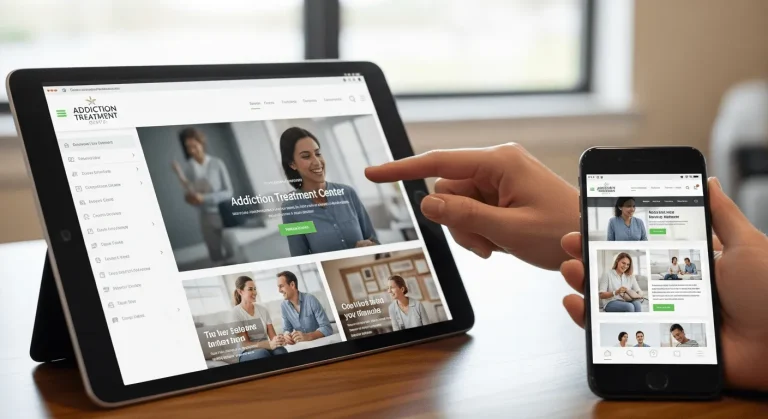
Your website is often a patient’s first interaction with your brand. If it’s clunky or unclear, trust slips fast. Key design features your site must include:
- Simple, intuitive layout makes information easy to find, keeping anxious users from bouncing
- Fast load times on both desktop and mobile reduce frustration and signal professionalism
- Visible bios and credentials for therapists, doctors, and staff reinforce your legitimacy
- Photos of real facilities (not stock images) help people picture themselves in care
- HIPAA compliance badges and clear privacy statements show that you take patient information seriously
People want to feel safe before they even reach out. How your site looks and behaves sends that message instantly. The rehab center website design experts highlight that design isn’t just visual, it’s about trust, usability, and detail, all working together.
Using SEO and Calls To Action To Reinforce Trust
Visitors look for signs you know what you’re doing. Simple SEO and trust signals play a significant role:
- Clear, relevant keywords in your service pages and blog reinforce credibility
- SEO schema markup and trust badges help Google and users verify your legitimacy
- SSL encryption ensures safe browsing and contributes to the perception of privacy
- CTAs like “Speak with a counselor” sound supportive, unlike pushy sales copy
Digital trust isn’t just about looks. Even telehealth users expect connection and clarity. Telehealth.HHS.gov on trust in virtual health emphasizes showing empathy, being consistent, and making a human connection, even across a screen.
Strengthen Your Online Reputation Through Reviews
Encouraging and Showcasing Patient Testimonials
Firsthand recovery stories do more than look good on your site; they build emotional trust that facts alone can’t match. Whether in video or text, authentic patient testimonials offer powerful social proof for prospects unsure of where to turn.
- Video testimonials tend to build a faster connection by offering voice tone, facial expressions, and body language that reinforce sincerity.
- Text testimonials, with names or initials and photos, are easier to collect and still boost credibility when presented thoughtfully.
- Always follow HIPAA guidelines. Make sure patients provide written consent and understand what will be shared publicly.
When displayed correctly, testimonials serve as living proof that your rehab center delivers real outcomes and compassionate care.
Responding To Reviews Builds Drug Rehab Center Credibility
Online reviews shape perception long before a call is made. Thoughtful, timely responses show you’re listening, and more importantly, that you care.
- Address reviews (positive or critical) quickly, ideally within 48 hours, to show attentiveness.
- Use custom responses, not generic boilerplate. Mention a specific detail and share appreciation or understanding.
- Don’t ignore negative feedback. A calm, respectful reply can actually improve trust by showing accountability.
Using tools like the review system example for rehabs lets your team actively invite client feedback at key moments, turning silence into visible advocacy.
According to a PubMed study on trust in online health communities, credibility grows when providers show empathy, consistency, and digital presence that feels human. That’s precisely what responsive, real-world engagement achieves.
Use Content and SEO To Establish Authority
Create Valuable, Human-Centered Educational Content
Building trust for drug rehab centers starts with content that speaks to what people fear, question, or hope for. Focus on topics like “How to help a loved one accept treatment” or “What to expect during detox.” These articles ease anxiety and build connection fast.
Keep your tone warm but clear. Avoid medical jargon unless you explain it. Address common concerns with empathy, not sales language. Offering detailed FAQs and personal stories in long-form blog posts helps build trust in mental health services and gives readers a reason to stay on your site longer.
When clinics invest in informative, patient-focused content for drug rehabs, it improves SEO and gives people confidence that the center understands their needs.
Optimize For E-A-T (Expertise, Authoritativeness, Trustworthiness)
Google weighs credibility heavily. That means your content needs clear authorship, accurate facts, and visible credentials. Use licensed clinicians or medically-reviewed stamping to signal authority upfront.
List your sources—link to reputable medical sites. Regularly update content to reflect current knowledge. These practices increase the credibility of drug rehab centers while boosting search visibility.
Linking internally to success stories or transparency pages also reinforces your message. And don’t neglect visual trust cues like certifications or press mentions, they support your authority silently but effectively.
Following AHRQ tips on gaining trust, clarity, honesty, and consistency across all web content builds strong digital trust at every stage of the patient journey.
Monitor and Manage Your Online Credibility Over Time
Tools and Metrics For Online Reputation Management Rehab
To maintain trust, you need to measure and shape it actively. Start by tracking your Net Promoter Score (NPS), Google reviews, and your center’s consistent presence in treatment directories. These help you spot early warning signs.
Use sentiment analysis tools to monitor how your brand is being discussed across forums, social media, and third-party sites. This includes spotting common concerns or false information, which should be addressed quickly and professionally.
Structured systems matter here. Platforms like online reputation management services ensure alerts, responses, and outreach aren’t left to chance. Proactive monitoring protects a rehab center’s long-term credibility and prevents trust erosion from unchecked negativity.
Ongoing Trust-Building Strategies For Rehab Centers
Trust isn’t a one-and-done deal. Keep it alive through email nurturing that shares real recovery stories, evidence-based articles, and practical resources. These small but consistent communications strengthen trust over time.
Stay active on your social channels with visible leadership and staff involvement. That human touch builds familiarity, not just reach. Also, highlight stats and outcomes carefully: avoid naming individuals, but share anonymized success data paired with national trends.
Citing the latest drug use research shows credibility, too. For example, aligning insights with NIDA drug use statistics signals your center stays informed and serious about combating addiction trends.
Actions like these don’t just maintain trust, they compound it. Every intentional move makes your rehab brand more believable, relatable, and respected.
Start Building Online Trust That Converts
Trust shapes every decision someone makes when considering addiction treatment. Without it, even the most polished rehab center won’t stand a chance. You could have a licensed team, a beautiful facility, or the best outcomes in your region, but if site visitors don’t believe that within seconds, they’ll leave.
Every detail plays into building trust for drug rehab centers:
- Your website design shows whether you’re current or outdated
- Review responses prove if you care or dismiss feedback
- Your blog content reflects whether you truly understand addiction or throw keywords around
- Even your call-to-action phrasing tells people if you respect their pace or push them too soon
If you’re not converting traffic into calls, trust gaps are likely the problem. That’s where expert-level auditing becomes vital. Running targeted SEO audits to build credibility can reveal weak technical signals, such as slow load speeds, missing schema markup, or inconsistent messaging, that quietly chip away at trust.
Now’s the time to assess your credibility with clear eyes. Are your credentials front and center? Does your content ease doubts or increase them? And most importantly, does everything you publish reflect the same care you deliver in person?
Building trust online isn’t guesswork. It’s discipline, detail, and dedication to being real, because people in crisis can spot fake from a mile away.
References
- Harvard T.H. Chan School of Public Health – 13 Tips For Establishing and Building Trust Around Health Content
- Telehealth.HHS.gov – Cultivating Trust and Building Relationships During A Telehealth Visit
- PubMed – Building Trusting Relationships In Online Health Communities
- Agency for Healthcare Research and Quality (AHRQ) – How Will You Gain The Trust Of Health Care Providers Or Plans?
- National Institute on Drug Abuse (NIDA) – Trends & Statistics