
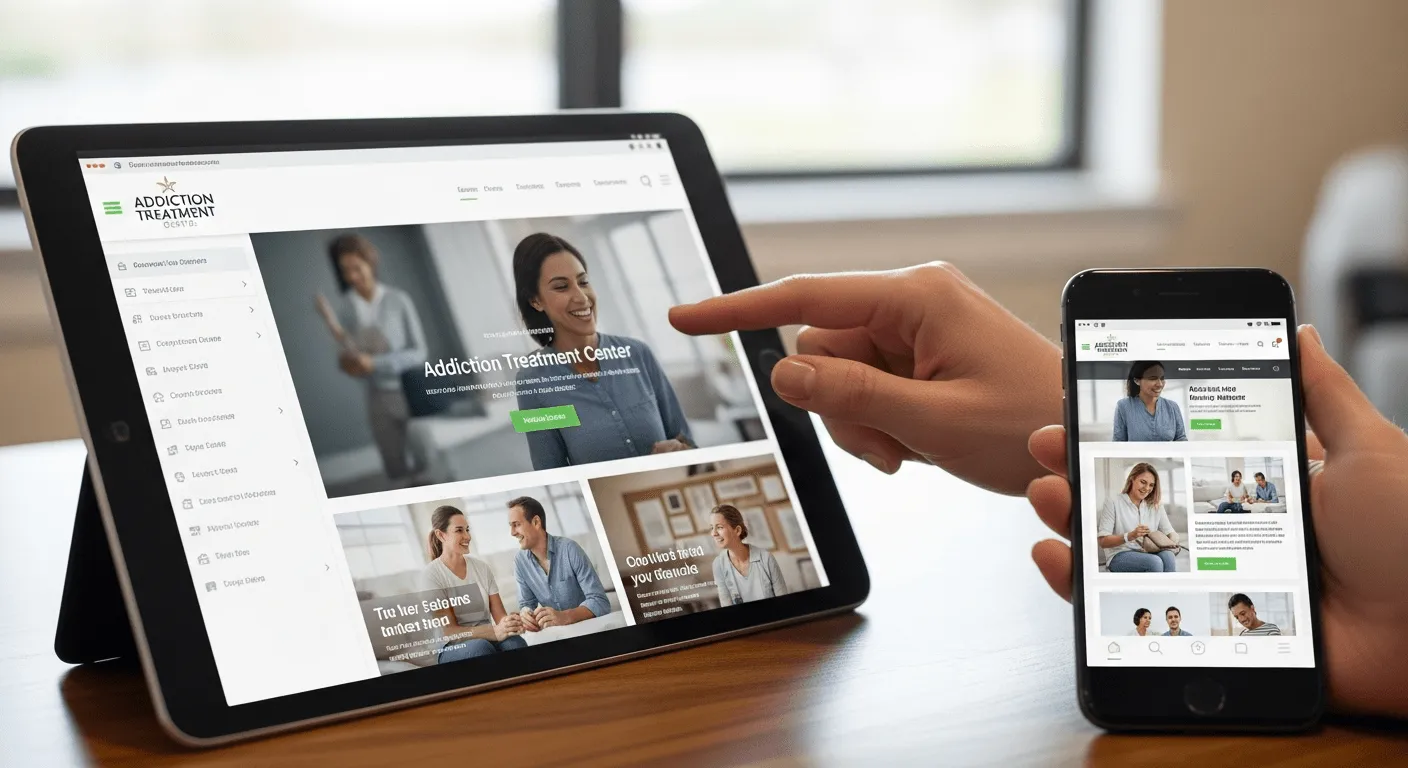
Update Your Addiction Treatment Center’s Website To Increase User Engagement
If your addiction treatment center website isn’t keeping visitors engaged, you’re missing out on potential patients and referrals. A well-optimized site improves not only visibility but also trust, interaction, and conversions.
In this article, you’ll learn how addiction treatment center website optimization impacts user experience and discover actionable tips to boost engagement, credibility, and patient retention.
Why Website Optimization Is Crucial For Treatment Centers
Understanding Modern User Expectations
Visitors to addiction treatment center websites expect quick, smooth interactions that support urgent needs. If your site isn’t mobile-friendly or takes more than a few seconds to load, most users will leave.
Key performance cues include:
- Mobile responsiveness allows users in crisis to access help anytime
- Fast loading speed reduces drop-off, especially for mobile and rural users
- Clear, intuitive navigation makes it easy to find detox, therapy, location, and admissions information
- ADA-compliant formatting ensures accessibility for users with disabilities and meets legal guidelines
Optimizing for these expectations improves both usability and credibility.
User Engagement and Patient Retention
Strong engagement isn’t just about clicks; it’s about building trust that leads to action. A patient or family member should feel understood the moment they land on your homepage.
Design features that increase connection:
- Warm, secure design elements build initial trust, especially when combined with SSL certificates and clear branding
- Patient-friendly layouts and headlines guide users toward contact forms or phone calls
- Behavior-based content strategy ensures relevance across different user goals, whether researching, comparing, or seeking immediate help.
In fact, an Analyzing Opioid-Use Disorder Websites study found that user-friendly design and layout clarity directly improved usability ratings and trust signals.
Partnering with agencies like Addiction treatment website design teams can elevate these experiences. Thoughtfully designed websites shape first impressions, increase time on site, and motivate potential patients to reach out.
Elements Of High-Engagement Mental Health Website Design
Visual Structure That Builds Trust
- Use high-contrast, clearly labeled call-to-action buttons to guide users to next steps such as calling, chatting, or scheduling.
- Stick to a minimalist layout that avoids clutter and directs focus. Soft, calming color palettes, like muted blues, greens, and neutrals, help reduce user anxiety.
- Humanize your site with real patient-focused visuals such as recovery journeys, welcoming facility images, or staff introductions via short videos.
Trust starts with how your site looks. Key trust factors include testimonials, professional design, and an intuitive layout, proven elements that directly impact how long users stay and how engaged they are.
Content That Connects Emotionally
- Share authentic patient testimonials that speak to hope, not just hardship, and highlight different recovery paths.
- Keep service explanations transparent and empathetic, use clear language without overwhelming clinical terms.
- Match your tone to your visitors’ emotional state, which is often anxious, confused, or hopeful. Use calm, reassuring phrasing.
Counselors increasingly point to digital tools as part of care delivery. A recent study found that many recommend web-based tools that their patients already trust, making the content’s tone and accuracy even more critical for credibility.
Good storytelling plays a role, too. Through content marketing strategies such as recovery blogs and video narratives, centers can boost time on site and reduce bounce rates by aligning messaging with users’ emotional journey.
How To Redesign Your Website Without Losing Traffic
Planning A Conversion-Centered Redesign
Redesigning your addiction treatment center’s website can increase inquiries, but only if you protect what’s already working. Start by preserving your existing SEO value during migration. That means setting up proper redirects, maintaining URL structure when possible, and updating internal links.
Effective redesigns are built on user behavior. Use journey mapping to understand how people search for treatment, from the moment they land on your homepage to when they fill out a contact form. Then apply those insights to streamline navigation and highlight calls to action.
Before launching the new design, analyze heatmaps and scroll data to identify what draws attention and what gets ignored. These tools help you keep high-performing elements and eliminate friction points so you don’t hurt your conversion rate.
Technical Elements To Prioritize
Much of your site’s performance rides on behind-the-scenes decisions. Structured data, such as a medical schema, helps search engines recognize your services for addiction and mental health care, improving your visibility in rich search results.
Load speed is equally critical: slow mobile experiences kill engagement. Compress images, limit third-party scripts, and rely on mobile-first coding techniques. Behavioral cues such as site speed and ease of use consistently influence engagement; a study on predictors of user engagement confirms that usability directly affects whether visitors take meaningful actions.
Lastly, secure hosting and HIPAA-compliant forms are non-negotiable. Without them, you’re risking trust and legal exposure. Professional guidance matters here: the professional website redesign services at NetVisits specialize in healthcare compliance and know how to maintain traffic during transition.
User Engagement Strategies That Actually Work
On-Site Features That Drive Action
Interactive tools give users a reason to stay engaged rather than bounce. The key is to make every click feel useful:
- Live chat or chatbot lets prospective patients or loved ones ask questions anonymously, boosting comfort and lowering hesitation to contact admissions.
- Self-assessment quizzes help users identify symptoms or assess addiction risk, serving as a helpful resource while also qualifying leads.
- Appointment request calendars allow visitors to take immediate action, reducing friction in the contact process.
These features guide users toward conversion while making them feel supported, not sold to.
SEO and Retargeting Tactics
Technical visibility is only half the equation. Retention and return visits complete the loop:
- Local SEO tactics, such as city-specific landing pages, help clinics show up in “rehab near me” searches, putting them directly in front of ready-to-act users.
- Email re-engagement funnels keep your facility top of mind with helpful content, relapse-prevention tips, and appointment reminders.
- Blog content for high-intent keywords (e.g., “how long is detox,” “do I need outpatient rehab”) is a proven way to attract searches near the decision point. Effective addiction treatment content creation captures attention and keeps readers engaged with valuable, relevant answers.
Current opioid-related concerns remain high and vary by region, which can help clinics plan geo-targeted content that speaks directly to their community’s needs.
Measuring Impact and Optimizing Over Time
Know Your Metrics
Measuring user behavior helps you figure out what works and what needs fixing. To understand how well your addiction treatment center website is performing, track these metrics closely:
- Bounce rate shows if visitors leave after a single page. A high rate means you’re not hooking their attention.
- Session duration reveals how long users stay. Longer times typically reflect stronger content engagement.
- Click-through rates (CTRs) for buttons or links indicate how compelling your calls to action are.
- Form submissions and call volume directly indicate user intent to seek treatment or ask for help.
- Returning visitors help you measure re-engagement and patient trust over time.
Together, these KPIs tell the real story of patient interest and treatment centers’ online presence.
Tools and Tactics For Improvement
Once you have data, it’s time to put it to use. Here’s how to turn insights into action:
- A/B test headlines and call-to-actions to see which phrasing converts more visitors into contacts.
- Use heatmaps to visualize where users scroll, click, or get stuck. This helps you prioritize design changes in high-traffic zones.
- Perform regular technical audits to maintain mobile usability, loading speed, and accessibility.
Consistent attention to SEO matters too. Partnering with professionals focused on addiction treatment center SEO ensures that technical and content performance continue to improve, even as Google updates its algorithm.
And don’t lose sight of ethics in your pursuit of results. Harvard’s “Buyer Beware” on Treatment Marketing reminds clinics that transparency, honesty, and user safety aren’t optional; they’re foundational for lasting trust.
Ready To Improve Your Website and Increase Engagement
Addiction treatment center website optimization isn’t just about ranking higher. It’s about creating a digital front door that builds trust, answers urgent questions, and converts interest into help-seeking action. Whether you’re redesigning your site or refining existing pages, every decision should support user engagement and patient retention.
To move forward with confidence:
- Audit your current digital performance. Where are users dropping off? Which pages drive the most calls? Let data guide your adjustments.
- Don’t skimp on design or content. Clunky layouts and vague copy make visitors bounce. Clean visuals, clear calls to action, and emotionally attuned wording make all the difference.
- Invest in ongoing improvement. Updating content, running A/B tests, and tracking traffic should be part of your monthly routine.
If your in-house team isn’t equipped to handle all of this, it’s smart to bring in specialists in digital marketing for healthcare. Working with an addiction treatment marketing agency helps you access in-depth knowledge of SEO, compliance, user behavior, and design best practices, all explicitly tailored to recovery services.
Being found online is no longer enough. You need to earn attention and trust from the first click.
References
- PubMed Central – Analyzing Opioid-Use Disorder Websites In The United States: An Optimized Website Usability Study
- PubMed Central – Exploring Whether Addiction Counselors Recommend That Their Patients Use Websites, Smartphone Apps, Or Other Digital Health Tools To Help Them In Their Recovery: Web-Based Survey
- PubMed Central – Examining Predictors Of Real-World User Engagement With Self-Guided eHealth Interventions: Analysis Of Mobile Apps and Websites Using A Novel Dataset
- Harvard Health Publishing – “Buyer Beware” When It Comes To Addiction Treatment